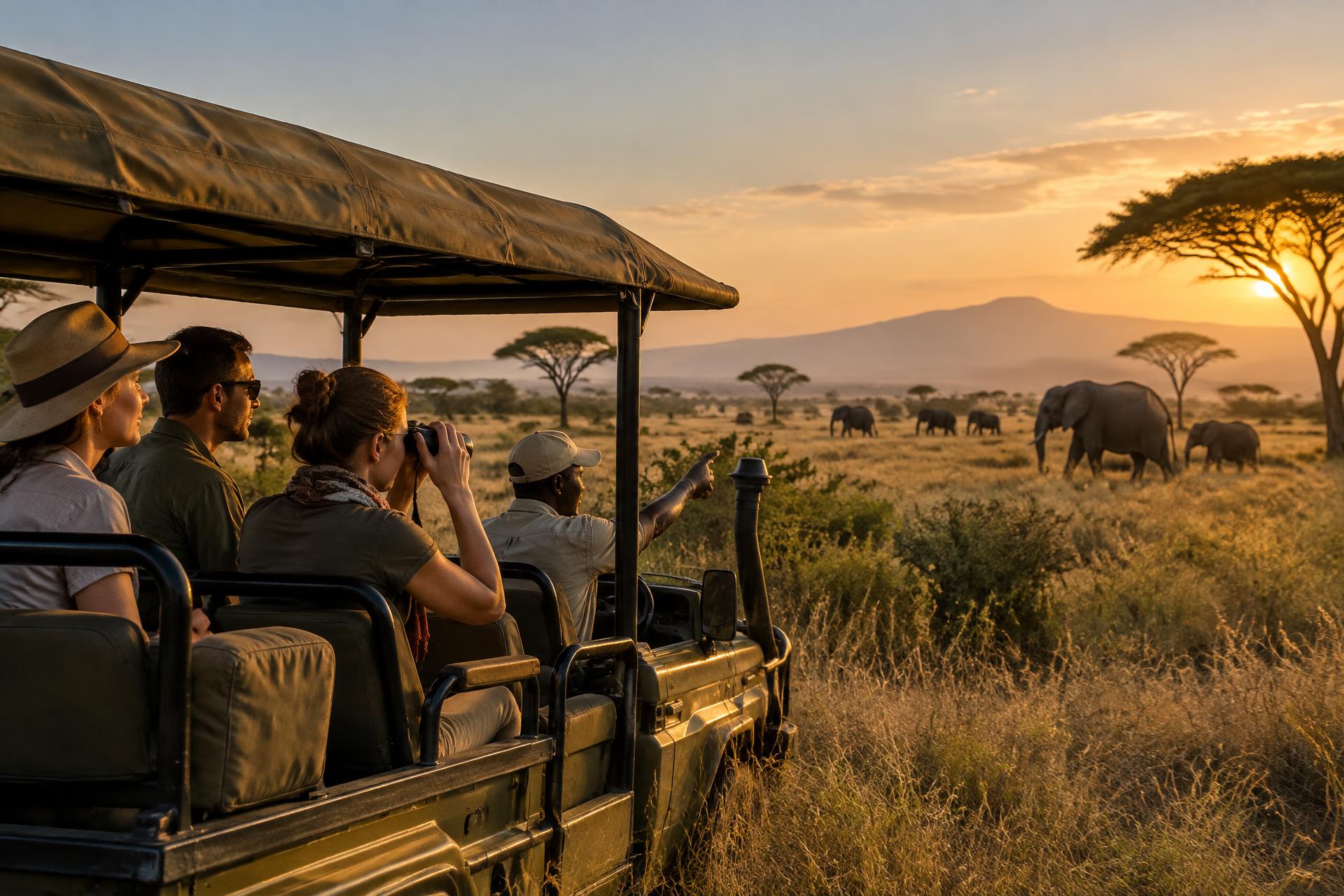
Choosing between Kenya and Tanzania is one of the hardest decisions in safari planning, and the honest answer is that you do not have to. A 14-day Kenya Tanzania safari links the two greatest wildlife countries on the continent into a single, perfectly paced journey. You travel from Amboseli's elephant herds beneath Kilimanjaro to the Masai Mara's big cats, then cross into Tanzania for the endless Serengeti plains, the geological marvel of Ngorongoro Crater, and the tree-climbing lions of Lake Manyara. This is the itinerary our Australian clients ask for more than any other, and it is the one we most love to build.
Why This Kenya Tanzania Safari Works So Well
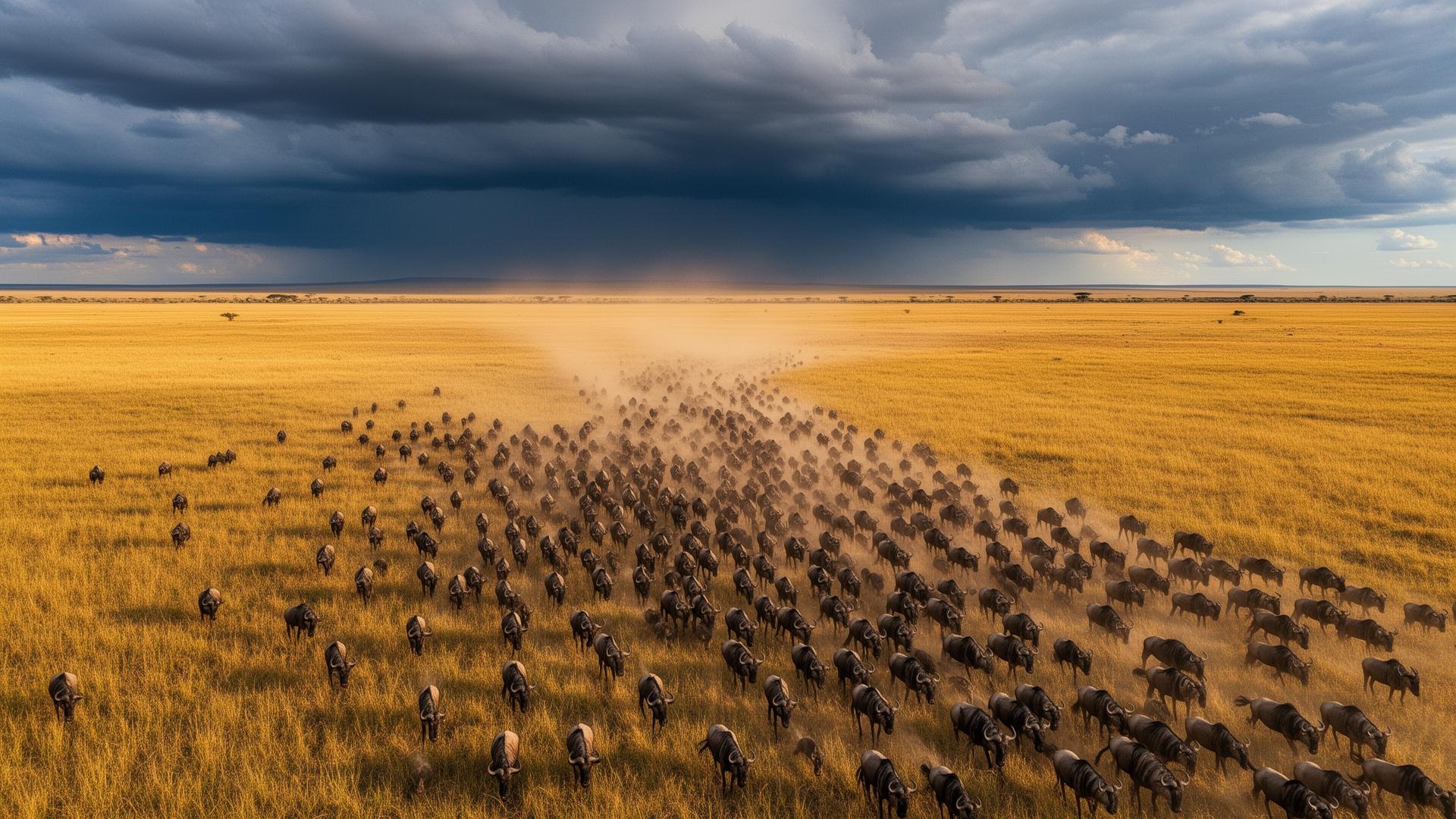
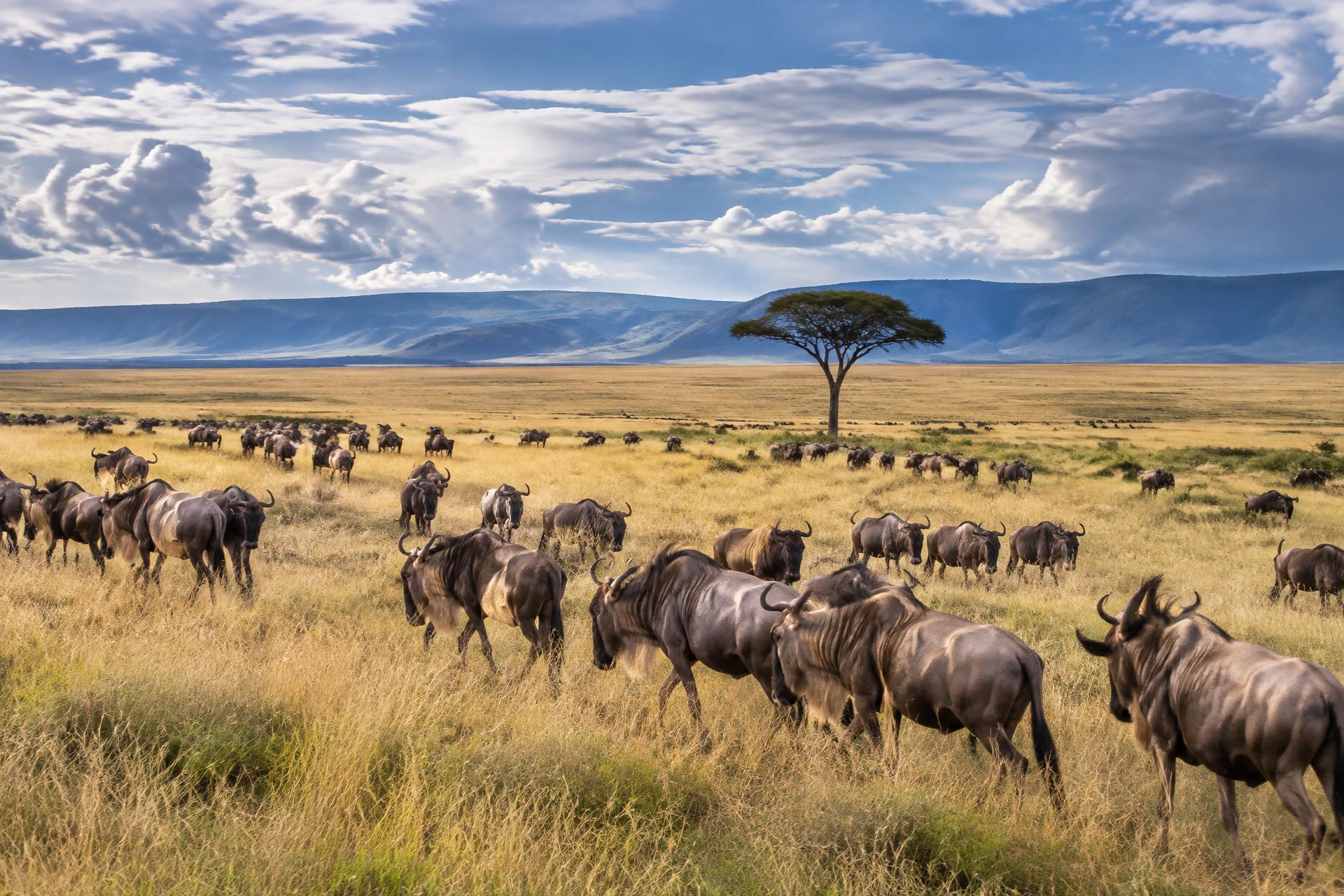
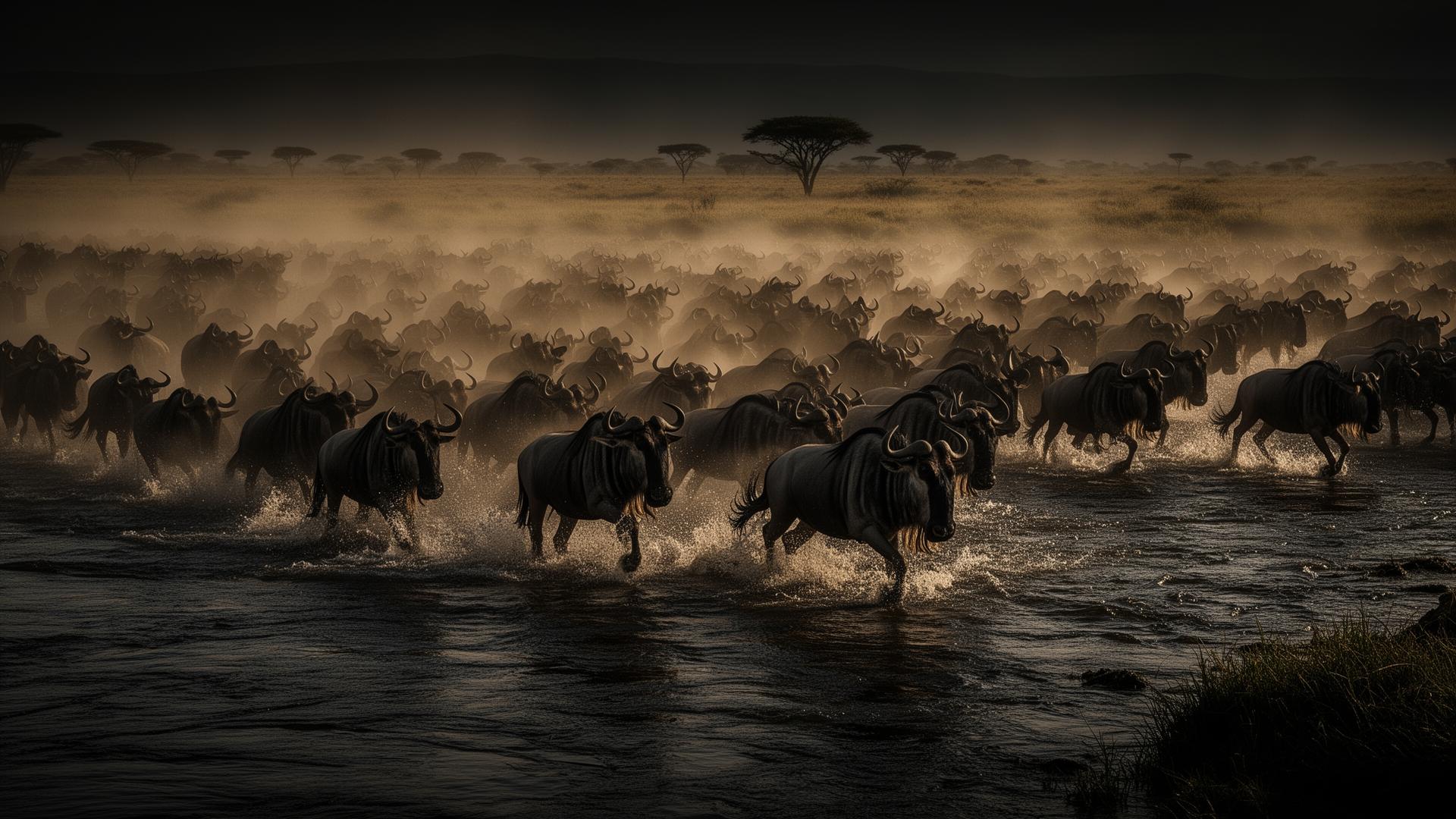
The Masai Mara and the Serengeti are, geologically speaking, the same ecosystem. A political border runs through it, but the wildebeest, zebra and predators pay it no attention. The Great Migration moves in a continuous circle across both countries, which means a well-timed combo safari can put you in front of the herds for weeks at a time, not just the few days most single-country itineraries allow.
Beyond the migration, each country brings something the other simply cannot. Kenya delivers dense predator action in compact reserves, deep Maasai cultural experiences, and the postcard image of an elephant beneath a snow-capped Mount Kilimanjaro. Tanzania delivers scale, silence and geological drama: the 260-square-kilometre Ngorongoro Crater, the seemingly infinite short-grass plains of the southern Serengeti, and the alkaline flamingo lakes of the Rift Valley. Combining them turns a very good safari into a truly great one.
Fourteen days is the sweet spot. It allows three or four nights in each key park, absorbs the internal flights and the border crossing without feeling rushed, and leaves room for the unhurried mornings that turn a game drive into a story. Shorter combos exist, but they trade the best moments for logistics.
Kenya vs Tanzania: Why Both, Not Just One
The comparison below is the one we walk every enquiry through. Both countries are extraordinary. Neither is objectively better. The point of a combo is that their strengths are almost perfectly complementary.
| Feature | Kenya | Tanzania |
|---|---|---|
| Signature park | Masai Mara National Reserve | Serengeti National Park |
| Best for big cats | Excellent, high density in the Mara | Excellent, especially central Serengeti |
| Great Migration window | July to October (Mara River crossings) | December to June (calving and Grumeti) |
| Geological drama | Rift Valley lakes, Mount Kenya | Ngorongoro Crater, Rift Valley escarpment |
| Cultural depth | Maasai and Samburu villages, community conservancies | Maasai bomas, Hadzabe and Datoga at Lake Eyasi |
| Iconic vistas | Elephants beneath Kilimanjaro (Amboseli) | Endless short-grass plains (Serengeti) |
| Park size | Smaller, more concentrated | Vast, requiring internal flights |
| Vehicle type | Open-sided 4x4 in conservancies | Pop-top Land Cruiser standard |
| Off-road driving | Allowed in private conservancies | Restricted inside national parks |
| Typical daily cost (luxury) | AUD $1,200 to $2,200 pp | AUD $1,400 to $2,600 pp |
| Beach extension | Diani or Lamu | Zanzibar |
The takeaway from that table is simple. Kenya gives you intimacy, cultural richness and the classic African skyline. Tanzania gives you scale, geological grandeur and the deepest part of the migration calendar. A 14-day combo captures the best of both without duplicating either.
The 14-Day / 13-Night Itinerary at a Glance
- Day 1: Arrive Nairobi, overnight at a boutique city hotel
- Days 2 to 3: Fly to Amboseli National Park for two nights with elephants beneath Kilimanjaro
- Days 4 to 6: Fly to the Masai Mara, three nights in a private conservancy
- Day 7: Cross-border flight from the Mara airstrips to the Serengeti
- Days 7 to 9: Central Serengeti, three nights tracking big cats and migration herds
- Days 10 to 11: Drive to the Ngorongoro Crater rim, two nights with a full crater day
- Day 12: Descend to Lake Manyara National Park for one night
- Day 13: Drive to Arusha, farewell dinner and day room
- Day 14: Fly home from Kilimanjaro International Airport, or add a Zanzibar extension
Day-by-Day Breakdown
Day 1: Arrival in Nairobi
Emirates, Qatar and Etihad all land into Jomo Kenyatta International Airport in the early morning. Our driver meets you at the arrivals hall, and within forty minutes you are settled at Hemingways Nairobi in the leafy suburb of Karen or, for something more central, the Fairmont The Norfolk. A long shower, a light lunch, and an optional afternoon visit to the David Sheldrick Elephant Orphanage or the Karen Blixen Museum ease you into East African rhythm.
Days 2 to 3: Amboseli National Park
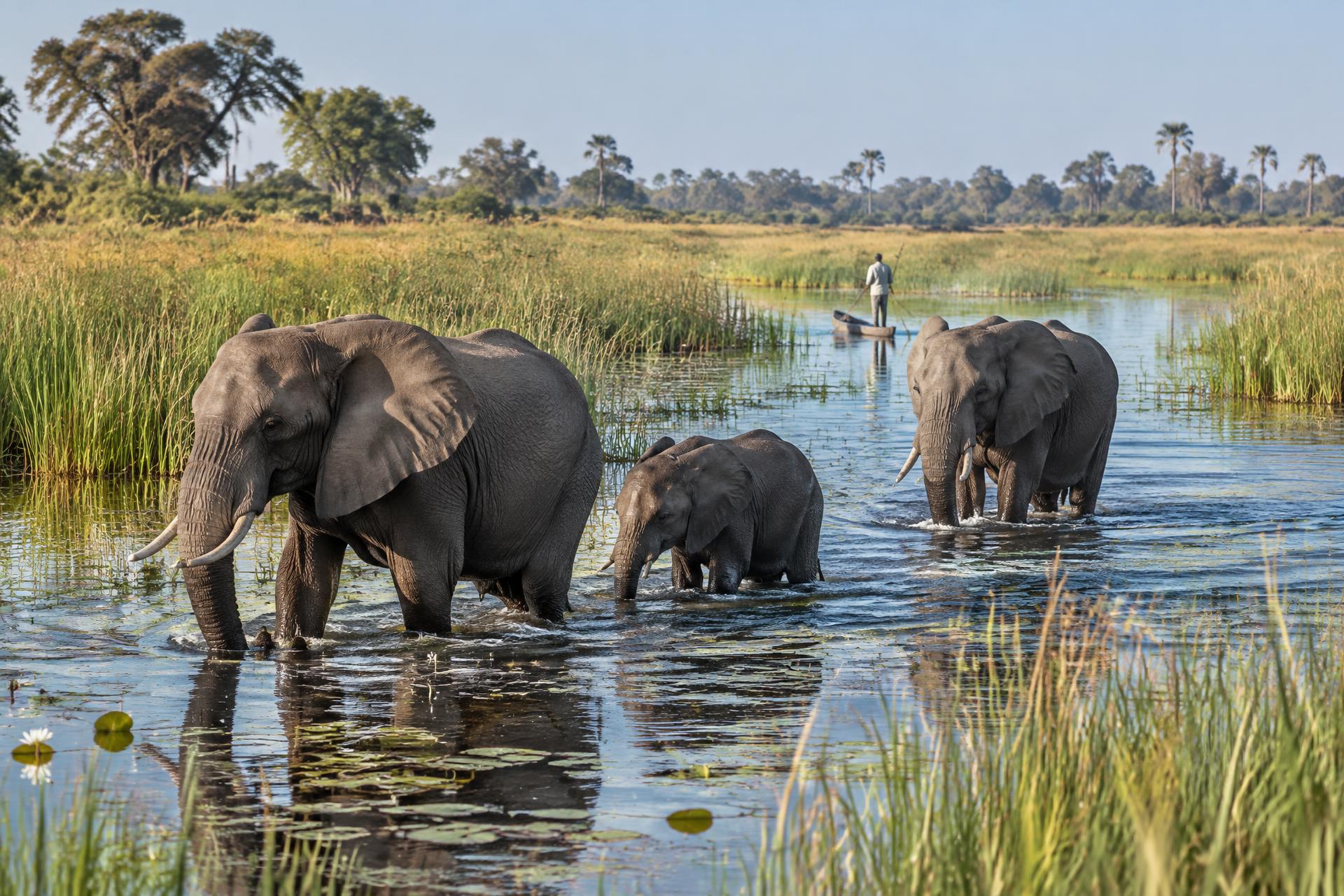
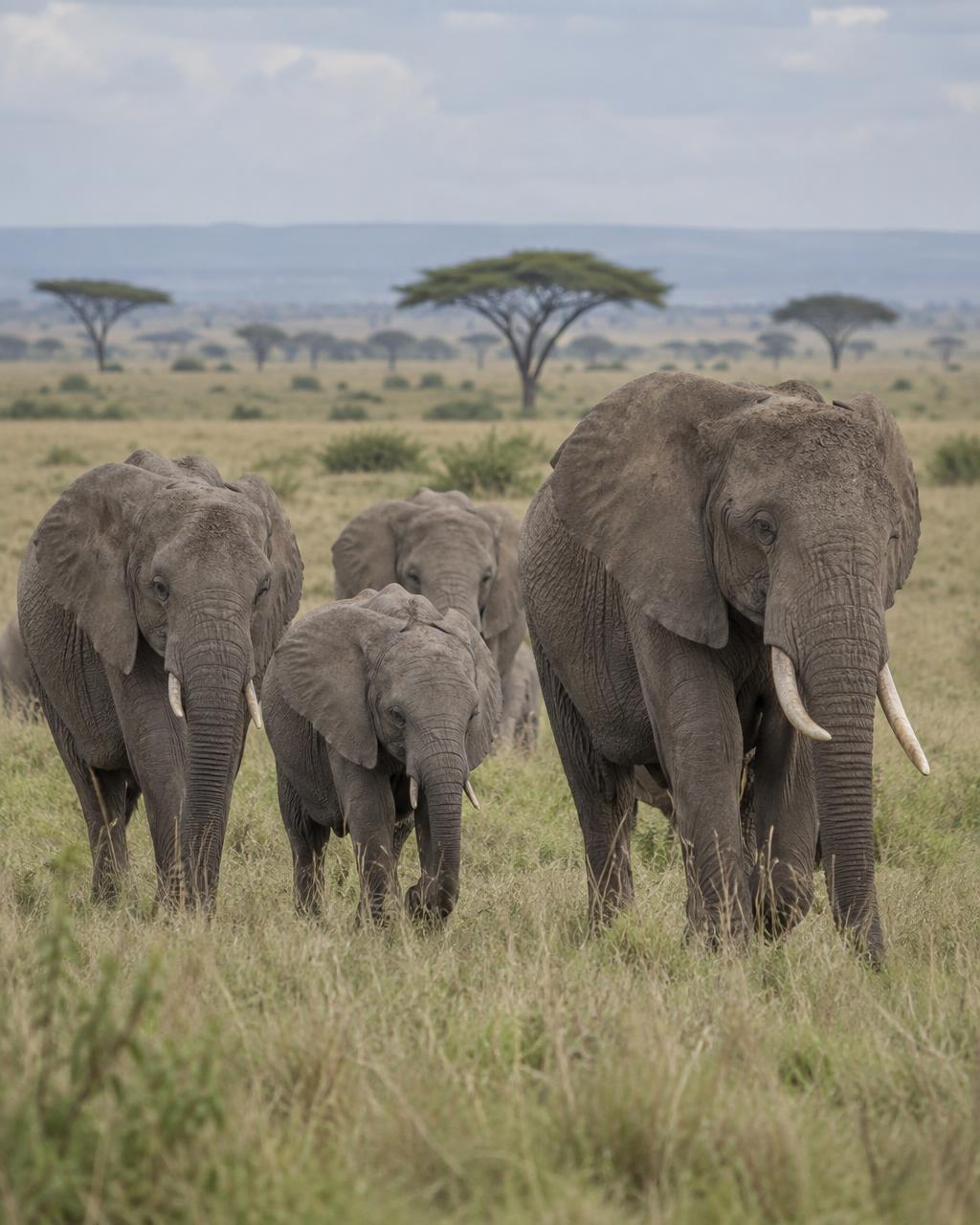
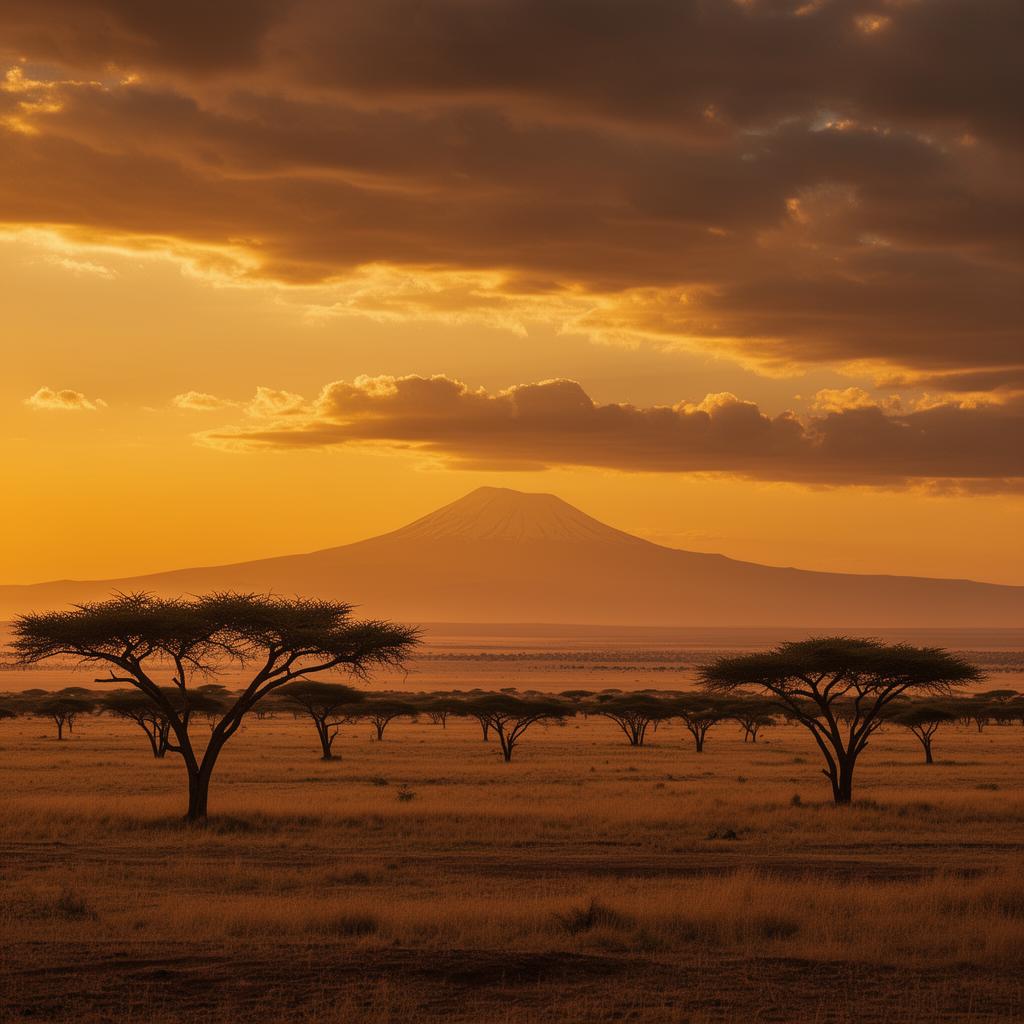
A short scheduled flight south lands on the dusty Amboseli airstrip beneath the silhouette of Mount Kilimanjaro. Amboseli's swamps draw some of the largest tuskers left in Africa, and the classic photograph of a family of elephants strung across the plain with Kilimanjaro's snows behind them is taken here. Two nights at Tortilis Camp or Angama Amboseli allow for sunrise and sunset drives when the mountain is most likely to reveal itself.
Days 4 to 6: Masai Mara
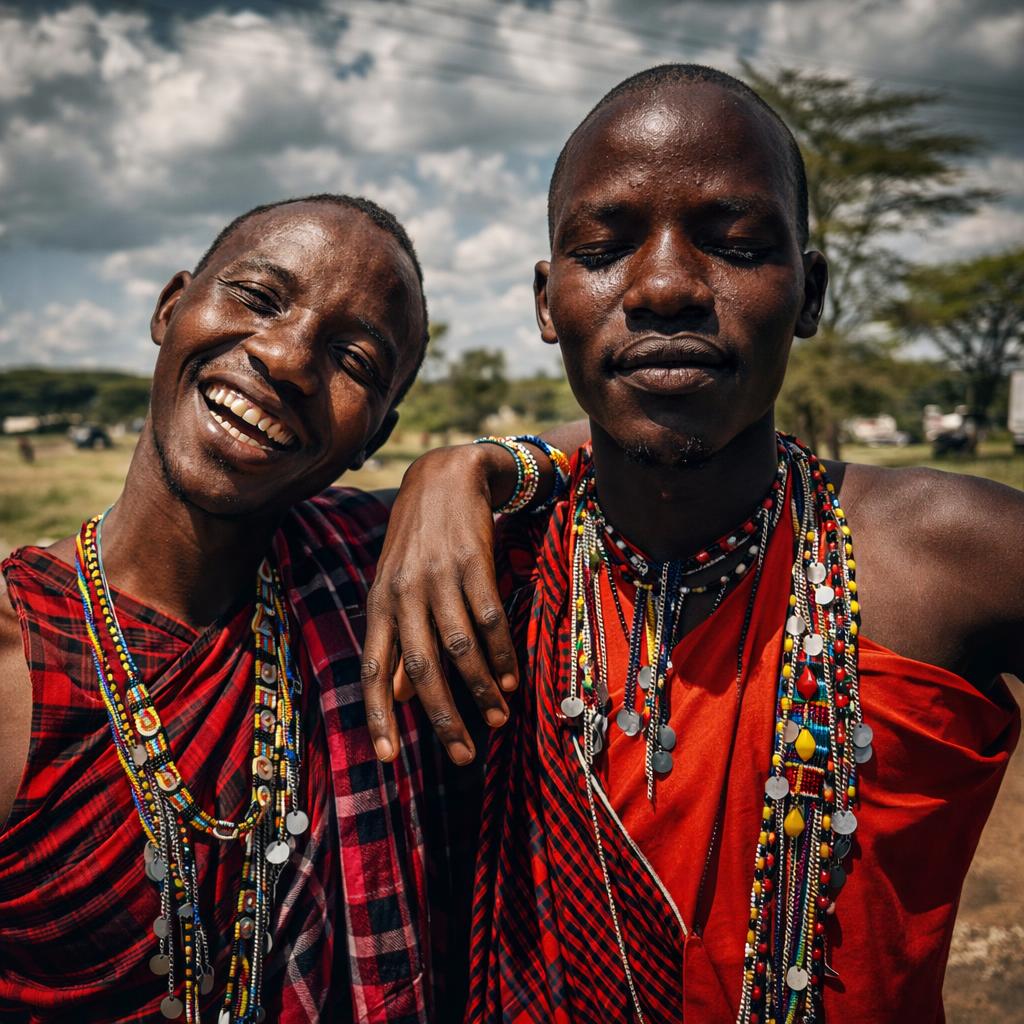
Fly north to one of the Mara airstrips and transfer to a private conservancy such as Olare Motorogi, Naboisho or Mara North. Conservancies limit vehicle numbers, allow off-road driving and night drives, and reinvest bed-night fees directly into Maasai landowner communities. Expect big cats in the morning, a bush breakfast beside a lugga, and long afternoons watching a leopard descend from a sausage tree. A visit to a working Maasai village, arranged through the community rather than the touristic version at the park gate, adds essential context.
Day 7: Cross-Border Flight to the Serengeti
This is the day most first-timers worry about and always end up loving. Rather than the long, dusty land crossing at Namanga or Isebania, the smart way to link the parks is a scheduled light-aircraft flight from the Mara airstrips into the Serengeti's Kogatende or Seronera airstrip via a brief immigration stop at Migori or Tarime. Bags are hand-carried, formalities take twenty minutes, and by lunchtime you are on your first Tanzanian game drive.
Days 7 to 9: Central Serengeti
The Seronera Valley is the beating heart of the Serengeti, with permanent water, kopjes that shelter lion prides, and one of the highest leopard densities in Africa. Three nights at a classic tented camp such as Sanctuary Kichakani, Namiri Plains or one of the Serengeti Under Canvas migration camps positions you for both resident wildlife and the moving herds. Your guide will read the season and reposition you north to the Mara River in July to October, or south to Ndutu and the calving grounds in January to March.
Days 10 to 11: Ngorongoro Crater
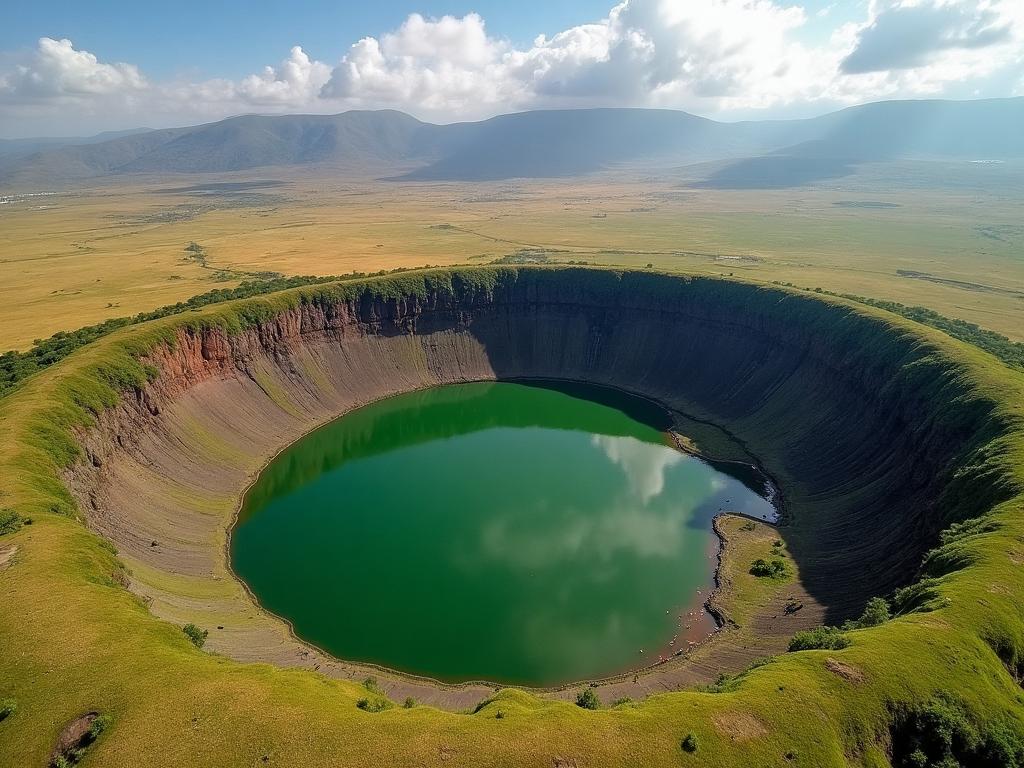
A four-hour drive south through the Serengeti gate, past the Olduvai Gorge and up the forested crater rim brings you to the edge of the world's largest intact volcanic caldera. Two nights at &Beyond Ngorongoro Crater Lodge or The Highlands allows one full day descending 600 metres to the crater floor, where roughly 25,000 large mammals live year-round, including one of the last remaining populations of black rhino in the country. A Ngorongoro Crater tour is often the single most-photographed day of the entire itinerary.
Day 12: Lake Manyara National Park
A gentle half-day drive drops you off the escarpment into Lake Manyara, a slim strip of groundwater forest, alkaline lake and open plain famous for its tree-climbing lions and enormous flocks of flamingo when the water is right. One night at Lake Manyara Serena or a smaller tented camp is enough to enjoy an afternoon game drive and a late breakfast before continuing on.
Day 13: Arusha and Farewell Dinner
The drive from Manyara to Arusha takes around two hours through Mto wa Mbu village, with an optional stop at a coffee plantation on the slopes of Mount Meru. A day room at Legendary Lodge or Arusha Coffee Lodge lets you shower, repack and enjoy a proper farewell dinner before your evening transfer to Kilimanjaro International Airport.
Day 14: Depart Kilimanjaro International Airport
Overnight flights via Doha, Dubai or Addis Ababa connect back to Sydney, Melbourne, Brisbane and Perth. Travellers who cannot bear the idea of going home add a three or four-night Zanzibar extension at this point, swapping game drives for spice tours, dhow sails and the reef off Mnemba Island.
The Great Migration: Month-by-Month Timing Chart
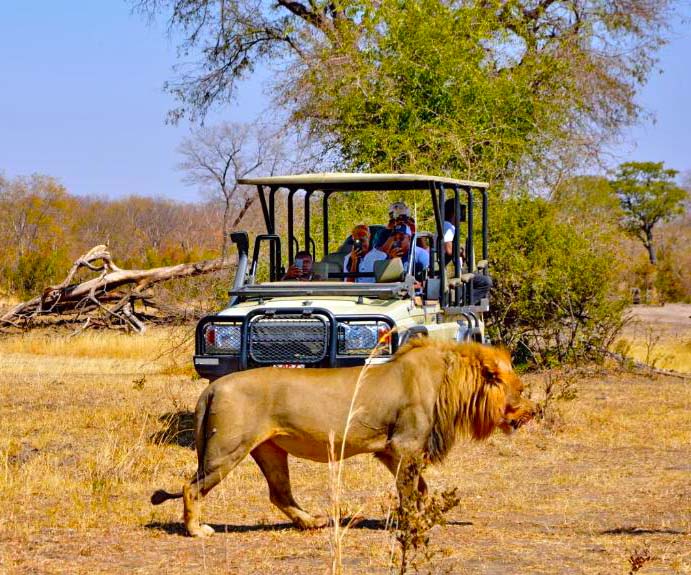
The Great Migration is not an event you chase, it is a circle you meet. This chart shows roughly where the herds are and what to expect in each month, so you can plan your combo around the moment that matters most to you.
| Month | Herd location | What you see |
|---|---|---|
| January | Southern Serengeti and Ndutu, Tanzania | Herds arriving on short-grass plains, calving imminent |
| February | Ndutu and Ngorongoro Conservation Area | Calving season peak, roughly 8,000 calves born per day |
| March | Southern Serengeti, moving west | Predator action at its most intense, dramatic photography |
| April | Central and western Serengeti | Green season, dramatic skies, herds beginning to move |
| May | Western corridor, approaching the Grumeti River | First Grumeti crossings, fewer vehicles, excellent value |
| June | Grumeti River, western Serengeti | Dramatic Grumeti crossings with resident crocodiles |
| July | Northern Serengeti, first Mara River crossings | Dry season begins, herds arriving on the Kenya border |
| August | Northern Serengeti and Masai Mara, Kenya | Peak Mara River crossings, iconic wildlife imagery |
| September | Masai Mara and northern Serengeti | Continued river crossings, ideal for combo safaris |
| October | Masai Mara, herds beginning to return south | Final Mara crossings, big cats at their most active |
| November | Eastern Serengeti and Loliondo | Short rains, herds moving south, quieter parks |
| December | Southern Serengeti, Ndutu approaches | Herds returning to calving grounds, festive-season travel |
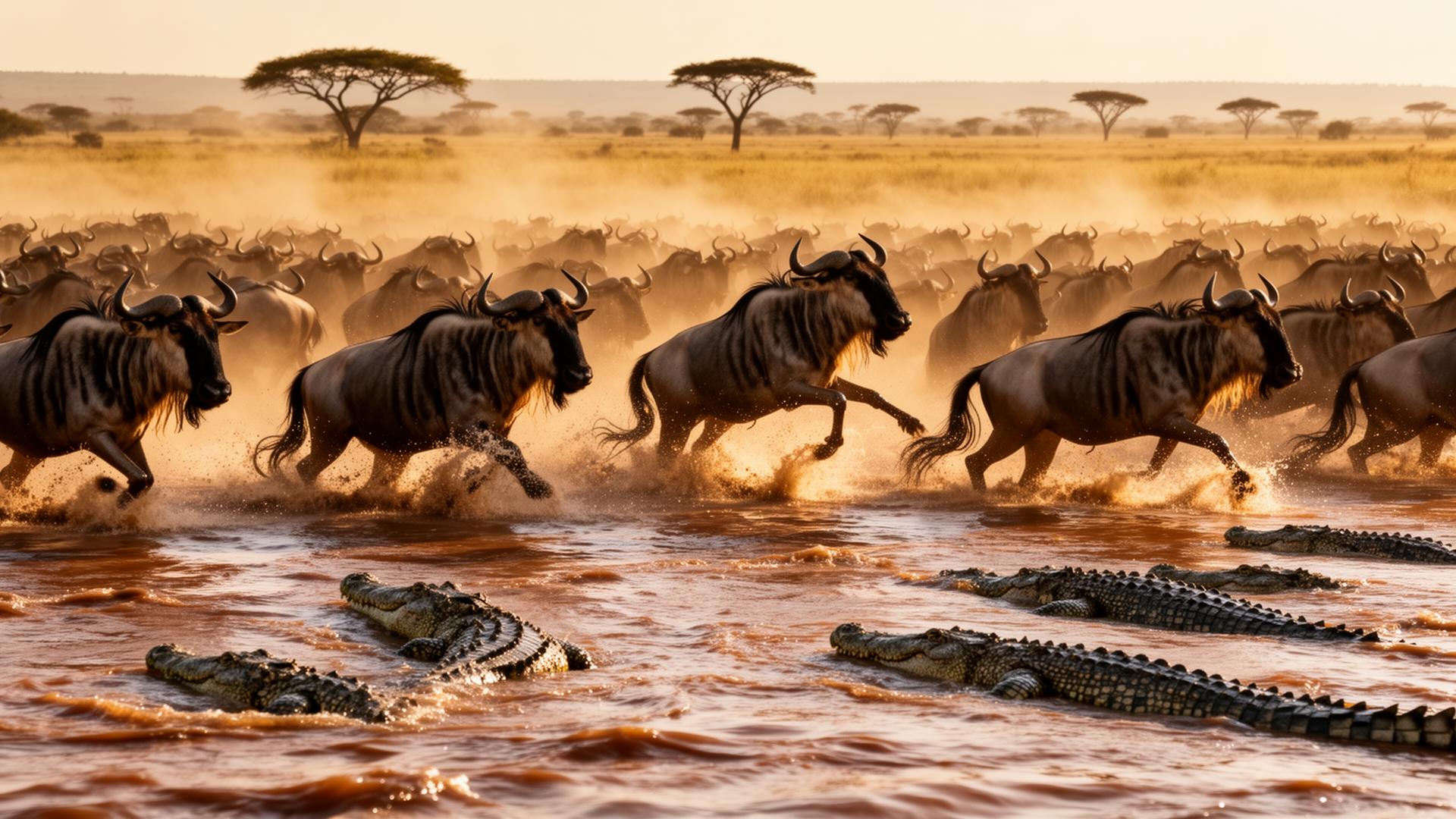
For a Kenya Tanzania combo, three windows stand out. Late July to early October captures the Mara River crossings on the Kenyan side and the herds spilling back into the northern Serengeti. Late January to March delivers the calving spectacle in Tanzania with a shorter Mara leg. And May to June offers superb value, dramatic green landscapes and the underrated Grumeti crossings.
Where You Stay
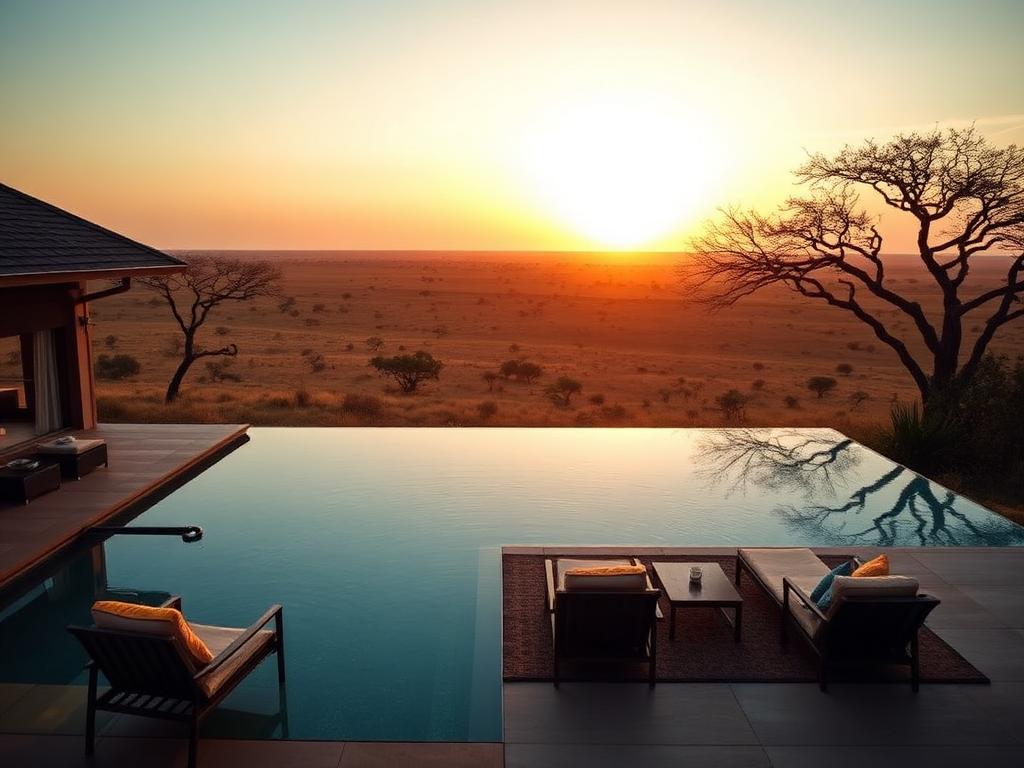
We design every 14-day Kenya Tanzania safari around three lodge tiers. Classic combines well-run tented camps such as Kicheche, Sanctuary and Serena at around AUD $12,000 to $16,000 per person. Premium moves into properties like Angama Mara, Sanctuary Kichakani and The Highlands at AUD $18,000 to $24,000 per person. Ultra-luxury steps up to Angama Amboseli, Mara Plains, Namiri Plains and &Beyond Ngorongoro Crater Lodge, from AUD $26,000 per person and up.
Every tier we recommend uses professional silver or gold-rated guides, honest single-supplement policies, and camps with genuine conservation credentials. We do not sell corporate lodges dressed up as boutique properties.
What It Costs and What Is Included
Budget AUD $14,000 to $28,000 per person for the 14-day land component, plus roughly AUD $3,500 to $6,500 return from Australia in premium economy or business class. Our Kenya Tanzania safari packages include all internal flights, private guiding, park and conservancy fees, all meals and most drinks at camp, laundry, and 24-hour on-ground support from our Nairobi and Arusha teams.
Not included: international flights (we book these separately at wholesale rates), tourist visas at USD $50 to $100 each, personal insurance, and guide gratuities of around USD $20 to $30 per guest per day.
Best Time to Travel This Combo
Our most-booked departure windows are July to October (Australian winter, aligned with school holidays and the Mara crossings) and late January to early March (Australian summer, the calving season). May and June offer noticeably lower rates and superb photography for travellers with flexibility.
November's short rains are shorter than their reputation suggests and can be a rewarding time to travel, particularly for birders. We generally steer clients away from the long rains in April, when some camps close and road transfers become slow.
Practical Logistics for Australians
Flights from Australia route via Doha (Qatar Airways), Dubai (Emirates), Abu Dhabi (Etihad) or Singapore and Addis Ababa (Ethiopian Airlines). Total travel time from the east coast is 20 to 24 hours. We book the return leg into Kilimanjaro International Airport to avoid a costly extra internal flight back to Nairobi.
Kenya and Tanzania each require an electronic visa applied for online before travel. Yellow fever certificates are checked at the Tanzanian border if you have visited a yellow fever country in the previous six days, including Kenya, so we ensure every Australian client carries the certificate. The cross-border light-aircraft transfer we build in on Day 7 removes the two most tiring days of a traditional overland combo.
Responsible Travel and Conservation Footprint
Every camp we recommend on this itinerary contributes measurably to wildlife protection and community wellbeing. In Kenya, the Mara conservancies pay direct lease fees to more than 1,500 Maasai landowners. In Tanzania, properties inside the Ngorongoro Conservation Area fund ranger patrols and school programs across the caldera's surrounding villages. The Serengeti's northern camps support the Frankfurt Zoological Society's anti-poaching work, and Amboseli's Big Life Foundation runs cross-border patrols we help fund through preferred-partner arrangements.
We also offset the aviation footprint of every safari through Carbon Tanzania, a verified REDD+ scheme protecting Yaeda Valley forest in the Rift Valley. This is included in your package cost, not added as an extra.
How to Book with Travel to Africa
Every Kenya Tanzania safari we design begins with a phone call from our Sydney office. We ask about your travel style, budget, dietary preferences, mobility, and whether you would rather sleep with the sound of a river or the silence of a plain. From there we build a proposal within five working days, refine it together, and hold camps only once you are comfortable. First deposit is 20 percent, with final balance due 60 days before departure.
With more than 20 years of Africa specialism and on-ground teams in both Nairobi and Arusha, we handle every detail from the moment you leave your front door to the moment you return. All you need to do is arrive and let East Africa unfold in front of you.
Frequently Asked Questions
How much does a 14-day Kenya Tanzania safari cost?
Budget AUD $14,000 to $28,000 per person for the 14-day land component depending on lodge tier, plus roughly AUD $3,500 to $6,500 return from Australia. Our Kenya Tanzania safari packages include all internal flights, private guiding, park and conservancy fees, all meals, and 24-hour on-ground support.
When is the best time for a Kenya Tanzania combo safari?
July to October captures the Mara River crossings on the Kenyan side and herds spilling into the northern Serengeti. Late January to March delivers the calving spectacle in the southern Serengeti. May to June offers excellent value with dramatic green landscapes and Grumeti crossings.
How do you cross the border between Kenya and Tanzania on safari?
The best route is a scheduled light-aircraft flight from the Masai Mara airstrips into the Serengeti via a brief immigration stop at Migori or Tarime. Formalities take around 20 minutes, avoiding the tiring overland crossing at Namanga or Isebania. You are on your first Tanzanian game drive by lunchtime.